I went in to talk about digital tourism and AI. I came out thinking about boardrooms
By Goran Mrvoš, founder, Infosit
It is the end of the academic year, so I am taking stock. This spring I taught at five faculties, in person and online, to students of tourism, sustainable development and smart destinations. Four of those lectures came through the Croatian Camping Union and its Fast Forward to Excellence initiative for sustainable tourism and sustainable careers, run with the Ministry of Tourism and Sport. The fifth was the Camping Resort Management programme in Opatija, an invitation I keep coming back to.
A gap that runs in two directions
Here is the uncomfortable part. The students who had already worked a season think like the industry. They know what a guest actually wants at 11pm at a reception desk, when the booking system says one thing and the person standing there needs another. The students who had not worked a season were bright and motivated, but still far from those real processes, and further still from the digital and AI reality that hotel companies, campsites and destinations will expect from them on day one.
This is not a complaint about the faculties. They invited a practitioner into the room precisely because they feel that distance too. Closing it is a shared job, theirs and ours. My part takes about ninety minutes.
Most of them were not using AI to learn at all
One moment stayed with me. I asked a hall of about a hundred students how many use AI as a tool for learning. Three hands went up. The rest were not using AI for their studies at all. This is the generation that will run reception desks, revenue teams and marketing departments in a few years, and the most capable learning tool of their lifetime was sitting unused.
So I told them plainly. They must start using NotebookLM. Then I told them why, with a story from my own home.
My son is the new generation. He learns faster from a video, a presentation or a podcast than from a classic textbook. His method is simple. He photographs the pages of a book, turns them into a PDF, and drops that into NotebookLM. From that one source the tool builds him an audio summary he can listen to, a short video, a set of slides, a quiz to test himself, and more. The important part is this. It works only from the source he gives it. It is not answering from the open internet. It is teaching him from his own book.
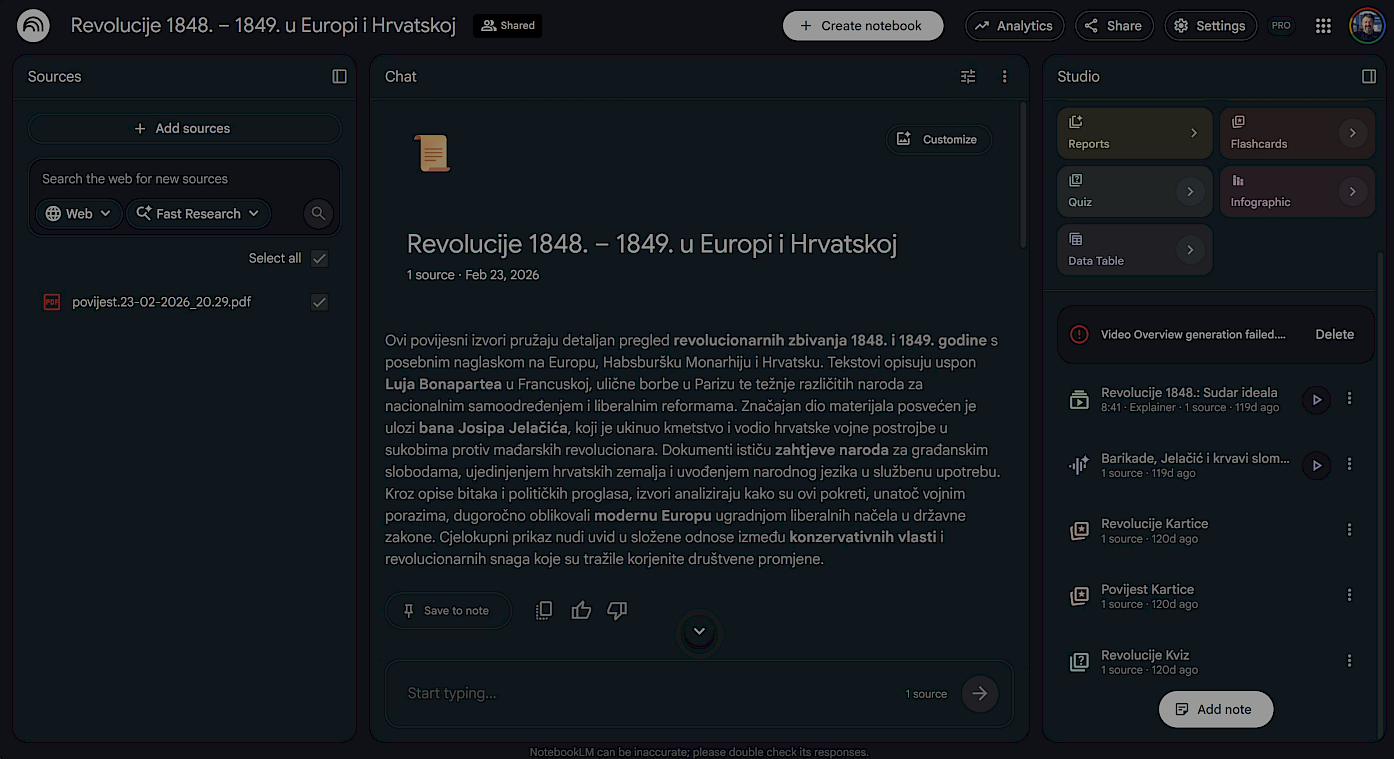
That is the whole point, and it is the same point that decides whether AI is useful in a business.
Where AI earns its place, and where it only pretends to
Most of the confusion around AI in tourism comes from talking about it in the abstract. The moment you make it concrete, the fog lifts. So the part I can do in ninety minutes is simple. I show where AI already earns its place, and where it only pretends to.
The first divide is data. An AI agent grounded in your own systems, the booking data, the property management system, your documents and procedures, can actually help. An AI agent running on general internet knowledge is a fancy chatbot. It can quote Wikipedia, but it knows nothing about your campsite, your availability tonight, or the guest waiting at your desk. Without your data, you do not have an assistant. You have a clever stranger. The value lives in the grounding, exactly as it does for my son and his book.
The second divide is security. The moment an agent touches real data, access has to mirror the organisation. A receptionist's assistant should see reservation data, not the payroll. A cleaner's view is the schedule, not the guests' personal details. A manager sees more, but still not everything. The rule is simple to state and easy to forget. If a person is not allowed to see something, the AI acting on their behalf must not see it either. Get this wrong and a helpful tool becomes a data breach.
AI earns its place where the work is repetitive, language heavy and easy to check, and where it sits on the right data with the right access. Drafting a reply to a routine guest request. Triaging an incoming message by language, urgency and sentiment, then routing it to the right person. Turning a plain question about occupancy into an answer a manager can act on. In each of these the pattern is the same. The machine does the fast, repetitive part. A person reviews and decides. AI suggests, human approves.
AI only pretends to earn its place when it is bolted on for show. A chatbot that cannot see your real availability, and so cannot actually help. A dashboard full of clever charts that no one uses to make a decision. A pilot launched mostly so the company can say it has a pilot.
Before a hotel group, a campsite or a destination trusts any AI use, five plain questions settle most of it:
- What decision or task does it actually change?
- Which data does it draw on, and is that data ours, not the open internet?
- Who is allowed to see what, so each person and their AI get only the data they should?
- Who reviews the output before it reaches a guest, or a number on a report?
- Can we measure the difference, in time, cost or satisfaction?
If a use cannot answer those five, it is theatre, not value.
The fog is identical, only the age in the room changes
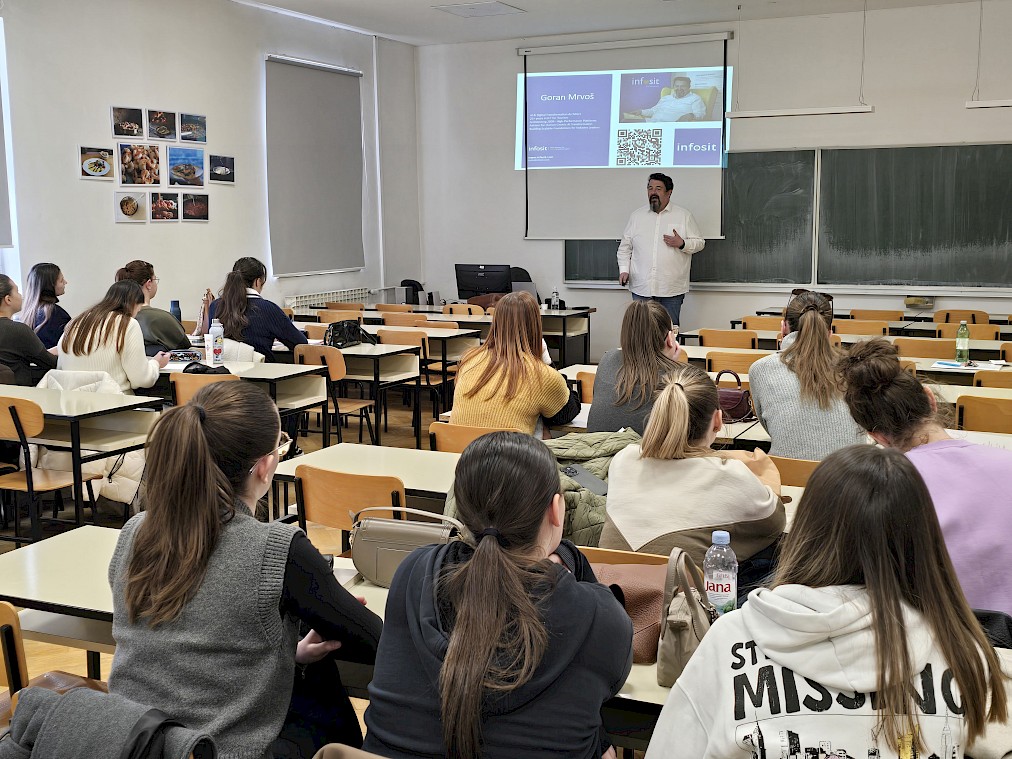
By the second lecture, something clicked. The questions these students asked were the same ones I get in management boardrooms. What is real and what is hype. Where do we start. What will it cost. Whose job changes. The fog is identical. Only the age in the room changes.
That turned out to be the most useful thing I learned all spring. If you can explain AI clearly to a room of non-technical students, you can explain it to any leadership team. The problem was never the audience. It was always the explanation. Most organisations do not have an AI knowledge problem. They have an AI clarity problem.
The shift that matters most is not in the room at all
And the shift that matters most is not in the lecture hall or the boardroom anyway. It is in the guest, and in the way people will soon plan, decide and book a trip with help from their own AI. When the guest arrives with an assistant that already knows their preferences, the question of who owns that conversation changes for every hotel company, campsite and destination. That is a larger story, and one I will come back to in a separate piece.
For now, the practical point is closer to home. This year's graduates are walking into hotel groups, campsites and destinations right now. Some of them already think like the industry. Most of them, as I learned, are not yet using AI even to study. All of them will soon reach for AI tools the way my generation reached for spreadsheets. The real question for employers is not whether these graduates know AI. It is whether the company has a plan, and the right data and access behind it, for the AI it puts in their hands.
If you are a hotel company, a campsite or a destination working that plan out, I am always glad to compare notes. That conversation is the same whether it happens in a lecture hall or across a boardroom table.
Got a project? Get in touch!
If you’re looking for a results-driven, innovative software development partner to help capitalize on new, profitable opportunities, reinvent your brand, or deliver incremental value to your business, we can help.